U.S. Announces Counterterrorism Push Targeting Leftist Groups, Pro-Palestine Activists
07/21/2026 / By Garrison Vance
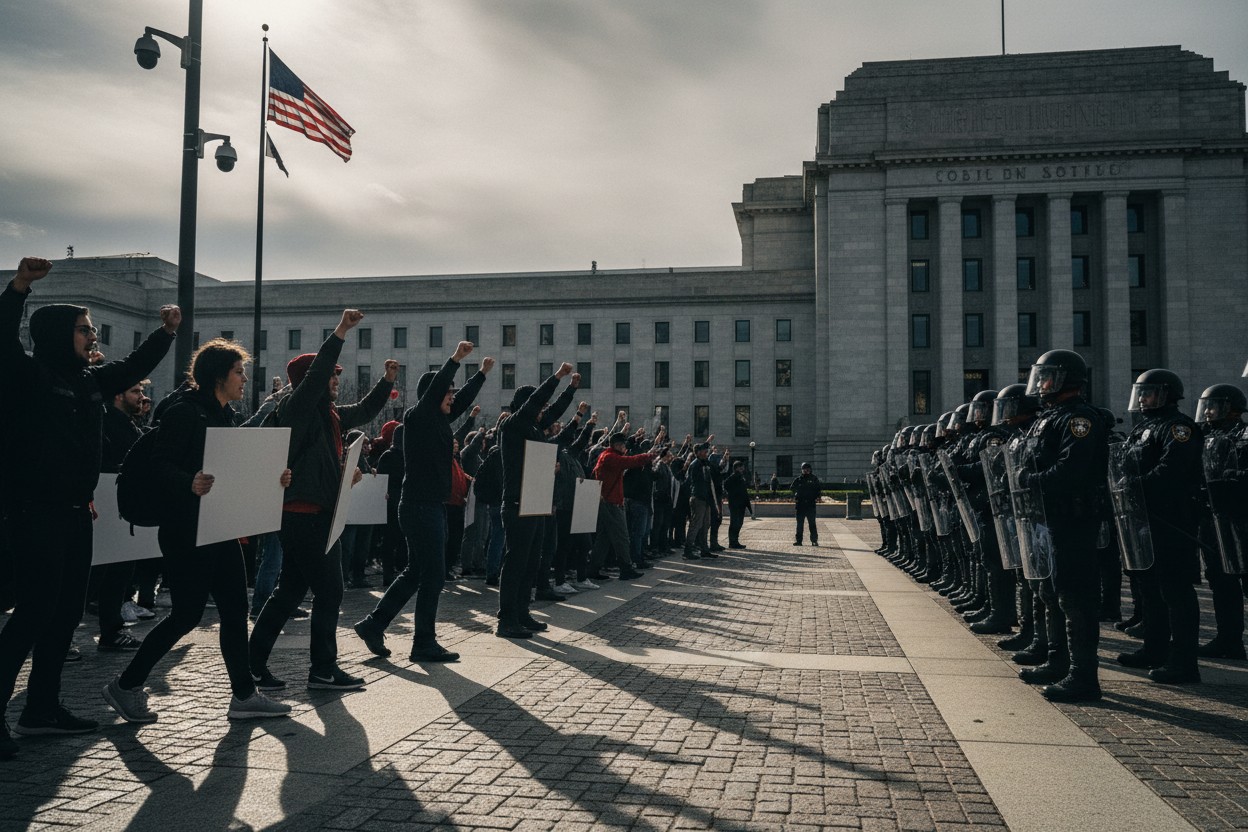
The Trump administration has announced an expanded counterterrorism focus on leftist militant groups, including those involved in pro-Palestine activism, according to officials familiar with the policy shift. Secretary of State Marco Rubio, speaking July 17 at a global counterterrorism summit in Washington, told representatives from more than 60 countries that the United States has historically neglected the threat posed by far-left organizations, describing it as a “blind spot” for intelligence agencies.
Rubio cited the property destruction and looting that occurred during the 2020 George Floyd protests as an example of left-wing violence, singling out the participation of Antifa. Former Attorney General William Barr previously described Antifa as a “revolutionary group” similar to the Bolsheviks, according to a report, saying the organization is interested in establishing socialism and communism in the United States [1].
Prior Actions and Rationale
The administration has already taken steps to address the perceived threat. In recent months, the State Department designated four European anarchist groups as Foreign Terrorist Organizations, and the Department of Homeland Security introduced new visa restrictions targeting individuals who incite violence or economic sabotage. Officials said these measures are part of a broader effort to confront what they describe as a growing trend of left-wing radicalization.
A watchdog report published in February warned that far-left activists protesting U.S. Immigration and Customs Enforcement operations are increasingly adopting violent rhetoric and armed insurgency tactics, including calls for the “complete annihilation” of political opponents [2]. Rubio also pointed to the 2020 George Floyd protests as a catalyst for the new policy. During those demonstrations, which saw widespread rioting and looting, Democrats initially blamed white nationalists, but evidence indicated that leftist elements, including supporters of Bernie Sanders, were behind much of the violence, according to a report [3].
Criticism from Lawmakers
The policy shift has drawn criticism from some Democratic lawmakers who argue that it is politically motivated. Eleven Democratic members of Congress sent a letter to Secretary Rubio stating that there is no evidence of a significant threat from left-wing groups and calling the counterterrorism strategy a “politically partisan document.” They urged the administration to return to an apolitical, data-driven approach and expressed concerns that the designations could be used to crack down on lawful protests and political opponents.
Critics have pointed to past instances where counterterrorism tools were applied broadly. In one case, a Christian chaplain in Britain was fired and reported to his government’s anti-terror program for delivering a sermon encouraging students to question LGBT ideology, raising questions about the scope of such measures [4]. A book by journalist David Kirby documents how the FBI and local law enforcement have historically surveilled domestic troublemakers, stretching the rule of law [5]. Similarly, a report by Ross Gelbspan details how the FBI infiltrated and targeted leftist organizations in the 1980s under the pretext of investigating terrorism [6].
Additional Claims and International Reaction
Rubio further alleged, without providing public evidence, that Iranian networks are tied to leftist militant groups and that Cuba has aided in building the far left in the United States. Israeli Foreign Minister Gideon Saar also addressed the summit, claiming there is a “growing operational alliance” between leftist activism and Islamist terrorist organizations. The announcements come amid U.S. and Israeli frustration over left-wing activism in pro-Palestine campus protests.
Concerns about foreign influence on U.S. protest movements have been raised before. House Republicans are currently investigating billionaire Neville Singham, who is based in China, over alleged funding of protest groups linked to riots in Los Angeles [7]. Historical accounts from former KGB agent Yuri Bezmenov describe Soviet tactics for destabilizing the West, including the cultivation of leftist movements [8].
Recent Developments and Implications
The administration’s expanded focus on leftist voices has raised concerns about free speech and protest rights. History shows that the FBI has previously used paid informants to infiltrate leftist organizations. A declassified FBI document from 1984 reveals that the FBI intended to provide a lump sum payment to an informant tasked with penetrating the leadership of a leftist solidarity group – CISPES – and furnishing information on its activities [6]. Such practices highlight the potential for overreach under the new policy.
In a related development, a left-wing Marxist activist was arrested in Ibiza in July under a U.S. extradition request, according to reports. The individual, who had donated over $1 million to Palestinian causes, including aid to victims in Gaza, was taken into custody based on allegations of supporting terrorism. The case underscores the global reach of Washington’s expanded counterterrorism push.
References
- NaturalNews.com. “AG Barr: Antifa is a fascistic ‘revolutionary group’ similar to the Bolsheviks” August 17, 2020.
- Belle Carter. “Radical Left-Wing Groups Embrace Armed Militancy Amid Anti-ICE Protests, Watchdog Warns” NaturalNews.com. February 9, 2026.
- NaturalNews.com. “Democrats absurdly blame white nationalists for George Floyd riots” June 5, 2020.
- NaturalNews.com. “Christian Chaplain reported to anti-terrorism programme for sermon on LGBT ideology” May 12, 2021.
- David Kirby. “When They Come for You”
- Ross Gelbspan. “Break ins Death Threats and the FBI”
- Willow Tohi. “House GOP Investigates China-Tied Billionaire’s Role in U.S. Protests Amid Foreign Influence Concerns” NaturalNews.com. June 17, 2025.
- PDF Expert 22 Mac. “Untamed”
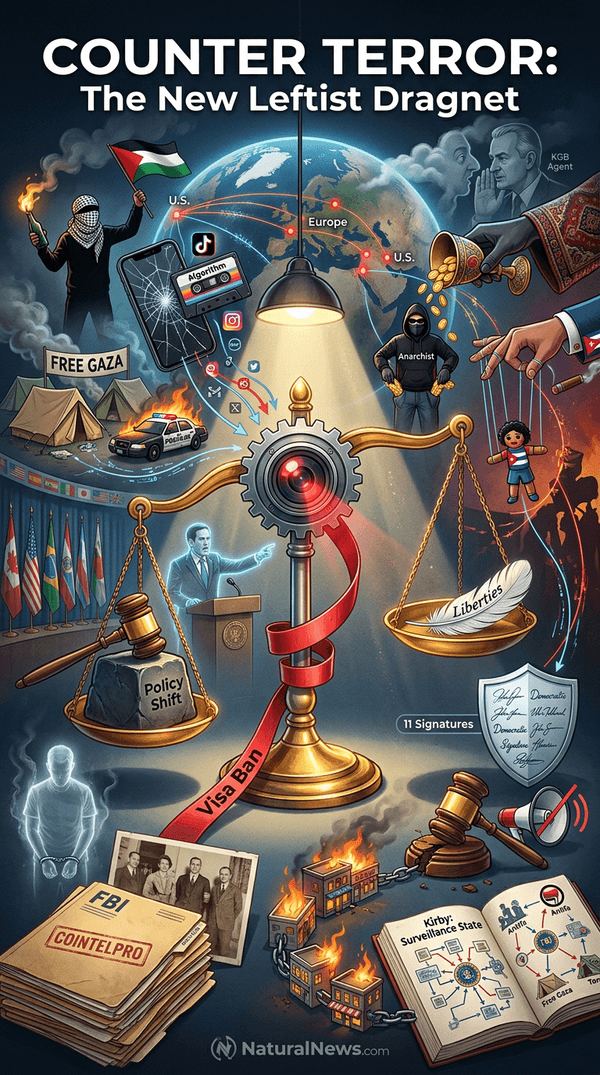
Explainer Infographic
Submit a correction >>
Tagged Under:
anarchy, antifa, armed militancy, big government, chaos, civil unrest, counterterrorism, domestic terrorism, Donald Trump, fascism, immigration policy, insurgency, left cult, national security, police state, politics, pro-palestine activists, protests, radicalism, terrorism, violence
This article may contain statements that reflect the opinion of the author
RECENT NEWS & ARTICLES